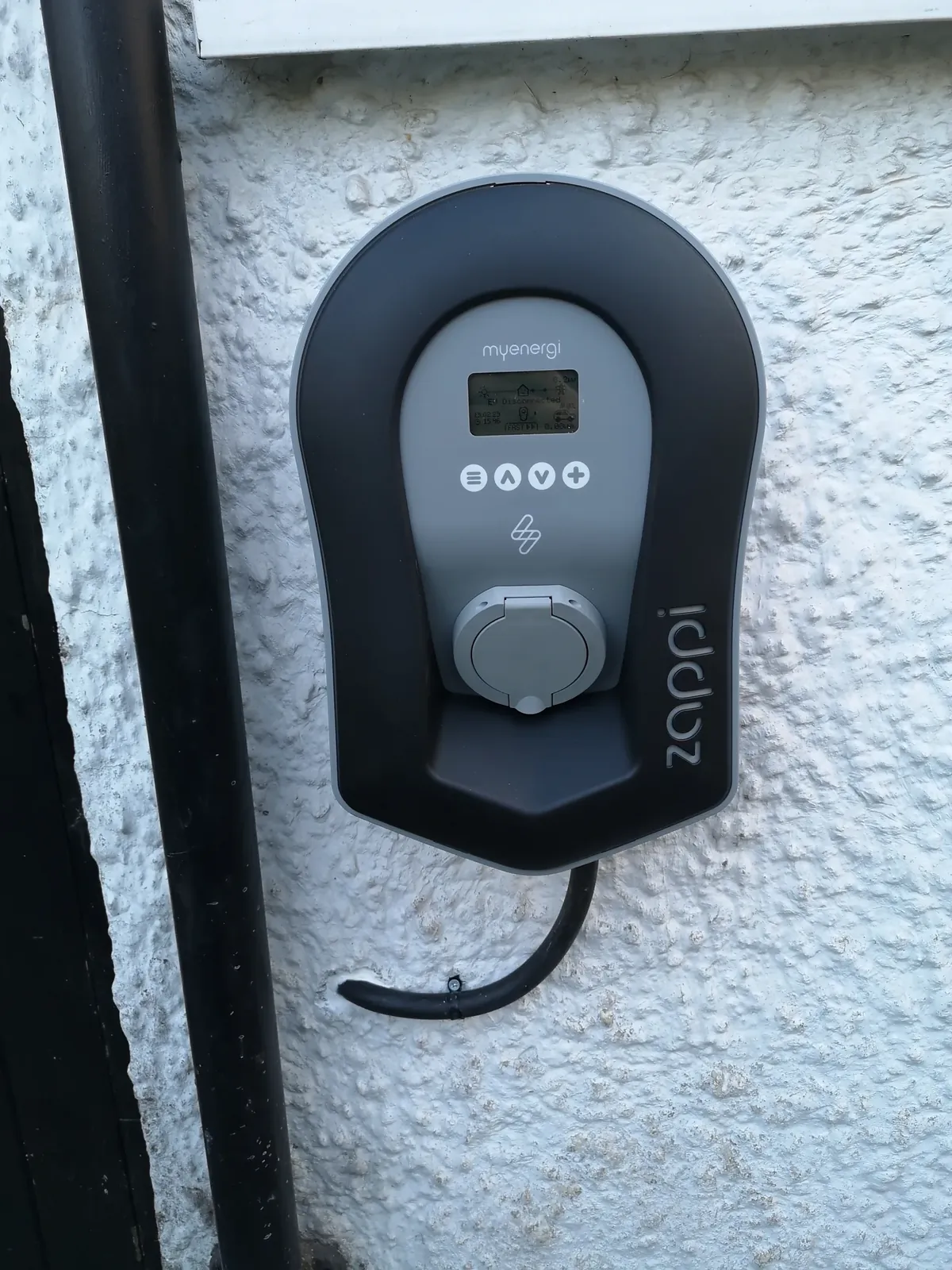
The right home EV charger depends on how you charge. An Ohme suits smart tariffs like Intelligent Octopus Go, a myenergi zappi suits homes with solar panels, and an Easee One or Zaptec Go suits anyone wanting a compact untethered unit. A 7kW home charger fills most EVs overnight in 6 to 8 hours and typically costs £850 to £1,200 inc. VAT fitted.
Here's something that surprises a lot of new EV owners: plug your car into an ordinary 3-pin socket and it can take 18 to 24 hours to fill a modern battery. That's a full day and night with a heavy load running through a socket that was designed for short bursts from a kettle or a hoover. A dedicated home charger is the better answer. The harder question is which one, because the choice comes down less to the charger itself and more to how you live, what tariff you're on and where you park.
Why Not Just Use a 3-Pin Plug?
A 3-pin socket charges at around 2.3kW. It'll do at a pinch, but it isn't built for it every day.
- Speed: a dedicated 7kW home charger is roughly three times faster, and fills most EVs overnight in 6 to 8 hours.
- Safety: long, heavy loads through a domestic socket and extension lead can overheat wiring that was never meant for continuous high current. A dedicated charger runs on its own protected circuit, with safety controls built in.
- Smarts: a proper charger connects to an app, so you can schedule charging for the cheapest hours and see exactly what you've used.
Matching the Charger to How You Charge
There's no single best EV charger for everyone. The four chargers we recommend most often each suit a different kind of household.
- Ohme: the one we recommend if you're on a smart tariff like Intelligent Octopus Go. It links with the tariff and charges during the cheapest overnight rates, which is where the real savings are.
- myenergi zappi: the natural choice if you have solar panels. It can divert surplus solar straight into your car rather than exporting it, so you're charging on sunshine you've already paid for.
- Easee One: compact and minimal, a good fit if you want something tidy on the front of the house.
- Zaptec Go: another compact, clean-looking unit, and a good option if appearance matters as much as features.
If you're not sure which camp you fall into, tell us your car, your tariff and whether you have solar panels or are planning to add them, and we'll recommend the one that fits.
Thinking About a Home EV Charger?
Call Dan at PowerOn Electrical on 07903 410887. Free quotes and honest advice on the right charger, across Newport, Cardiff, Bristol and South Wales.
Call for a Free QuoteTethered or Untethered?
A tethered charger has the cable permanently attached, so you just unhook it and plug in. An untethered charger has a socket on the front and you use your own cable, like the untethered zappi pictured at the start of this article.
- Tethered: the most convenient day to day. No cable to dig out of the boot, but the lead stays coiled on the wall.
- Untethered: a neater look on the house and you can use whatever length of cable suits you, but you'll be taking a cable in and out of the car.
Neither is wrong. It mostly comes down to whether you value convenience or a clean wall more, and how far the charge point on your car is from where the unit can go.
Can Your Home Take a Charger?
Before any charger goes on the wall, we carry out a pre-assessment. We check your main fuse, your consumer unit and where you park, to confirm the property can take a 7kW charger and to plan the neatest cable route.
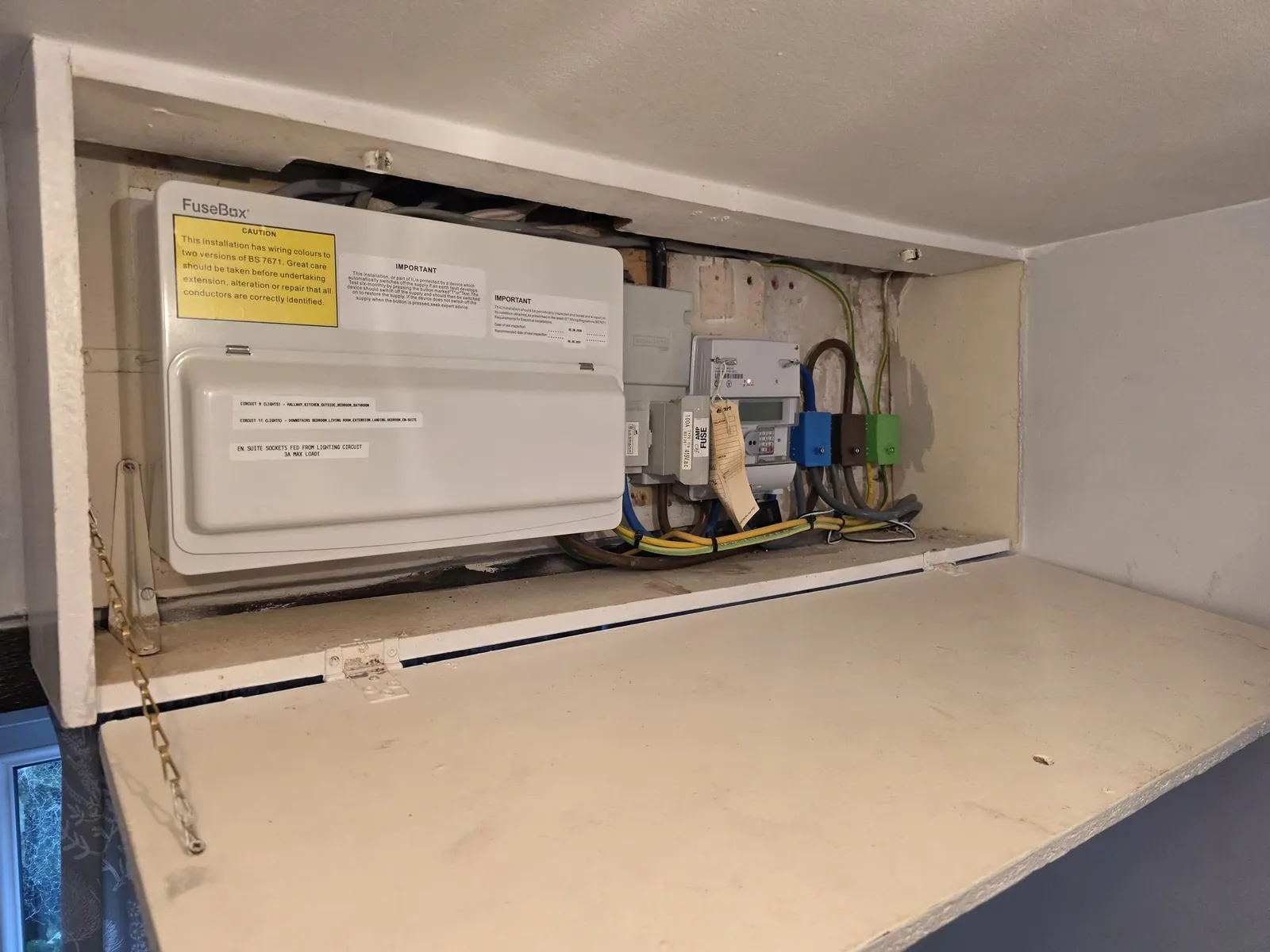
The consumer unit is the bit people don't expect. An EV charger needs its own protected circuit, and some older fuse boards don't have the space or the protection for it. That doesn't always mean an upgrade: where it suits the installation, we can fit a dedicated sub-main consumer unit just for the charger instead. Either way, we tell you upfront at the quote stage rather than on the day. If your board does need replacing, a consumer unit upgrade is typically £600 to £900 for a standard domestic board.
Installation Day and Cost
Most home EV charger installations cost between £850 and £1,200 inc. VAT, supplied and fitted. The price depends mainly on the charger you choose and how far the cable has to run from your consumer unit to where you park. Longer or more complex cable runs may cost more, and we confirm the price after a site survey.
- Mounting: the charger goes on the wall where you park, with a neat cable run back to the consumer unit.
- Power off: only briefly, usually 30 to 60 minutes, while we connect the dedicated protective device and test the new circuit.
- Set-up: before we leave, we connect the charger to your Wi-Fi, pair the app and run a test charge on your car.
- Paperwork: you get your electrical safety certificate, and our workmanship is guaranteed for 12 months.
We're NAPIT registered and based in Newport. If you'd like a price for your driveway, get in touch and we'll take it from there.
Frequently Asked Questions
A 7kW home charger fills most EVs overnight in 6 to 8 hours. That's roughly three times faster than a standard 3-pin socket, which can take 18 to 24 hours for a modern battery.
A myenergi zappi is usually the best fit, because it can divert surplus solar straight into your car. If you're on a smart tariff like Intelligent Octopus Go and don't have solar, an Ohme is hard to beat.
Not always. The charger needs its own suitably protected circuit, and some older boards lack the space or the Type A RCD protection for it. Where that's the case we can upgrade the board or fit a dedicated sub-main consumer unit just for the charger, and we'll include it all in your quote before any work starts.
Usually just 30 to 60 minutes, while we connect the new circuit to your consumer unit and test it. The rest of the installation, mounting the charger and running the cable, happens with your power on.