Your house probably needs a rewire if the wiring is more than 25 to 30 years old, you still have rewireable fuses, or you get tripping breakers, flickering lights, warm sockets or burning smells. A typical rewire in South Wales costs £4,000 to £9,000+ inc. VAT and takes 5 to 10 working days, and an EICR is the best way to find out for certain.
Most rewires don't start with anyone asking for one. They start with something small: a breaker that keeps tripping when the kettle and the toaster go on together, a socket in the back bedroom that feels warm, or a fuse box under the stairs that still takes fuse wire. Here's how to spot the signs in your own home, and what to expect if it does turn out to be time.
Warning Signs Your Wiring Is Past It
Old wiring rarely fails all at once. It gives you hints first, and most of them are easy to spot if you know what to look for.
- Breakers tripping or fuses blowing: The odd trip happens. Regular trips, especially on the same circuit, mean something isn't right, whether that's a fault on the cable, damp getting in or a circuit that's simply overloaded.
- Flickering or dimming lights: If lights dip when appliances switch on, or flicker for no obvious reason, it can point to loose or deteriorating connections.
- Warm sockets, scorch marks or burning smells: These are the ones not to ignore. Stop using the socket or switch and get it checked. If you can smell burning and can't find the source, turn the power off at the main switch and call an electrician.
- A fuse box with rewireable fuses: If your board has old ceramic fuse carriers with wire in them rather than modern breakers, there's no RCD protection on your circuits. That protection is what cuts the power fast if someone touches something live.
- Not enough sockets: Extension leads daisy-chained behind the TV and in every bedroom are a sign the house was wired for a very different way of living.
- Old-style accessories: Round-pin sockets, brown or cracked switches, and light fittings with fabric-covered flex are all signs the wiring behind them is likely just as old.
How Old Is Too Old?
As a rule of thumb, if the wiring in your house hasn't been updated in 25 to 30 years, it's worth having a proper look at it. That doesn't mean every 30-year-old installation needs ripping out. Plenty are still sound. But insulation ages, connections loosen over decades of warming up and cooling down, and homes today ask far more of their electrics than they did when many of them were wired.
Think about what a typical house runs now: induction hobs, electric showers, home offices, games consoles, phone chargers in every room and, increasingly, an EV charger on the drive. Wiring that was perfectly adequate for a cooker, a fridge and a telly can end up working far harder than it was designed to.
If you've just bought an older property, or you're planning a new kitchen or an extension, it's the ideal moment to find out where you stand. Rewiring before the units, tiles and decorating go in is far cheaper and neater than coming back to it afterwards.
Worried About Your Wiring?
Call Dan at PowerOn Electrical on 07903 410887. Surveys and quotes are free, and we cover Newport, Cardiff, Bristol and South Wales.
Call for a Free QuoteWhat a Rewire Actually Involves
A full house rewire replaces the cabling, back boxes, sockets, switches and light fittings throughout the property, and upgrades the consumer unit as well. Here's how it works.
- Free site survey: We come out, look at the existing installation, talk through where you want sockets, lights and appliances, and give you a clear, fixed price.
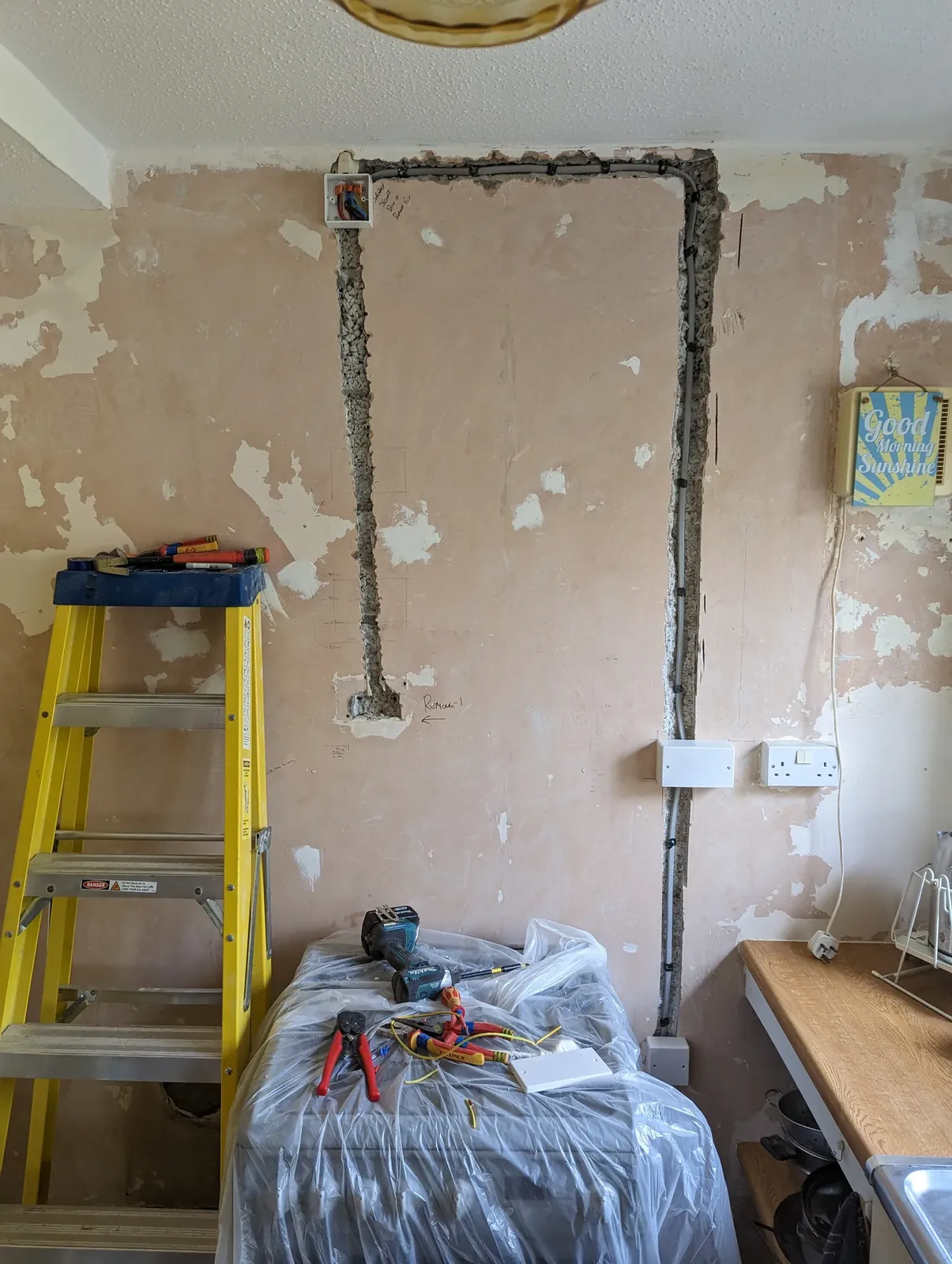
- First fix: The old wiring comes out and new cables are run behind walls, under floors and through ceilings. This is the messy part, with chasing into plaster and floorboards lifted.
- Second fix: Once the cables are in, sockets, switches and fittings go on, everything is connected to the new board and the power comes back.
- Testing and certification: Every circuit is tested before we leave, and you get the certificate for the work.
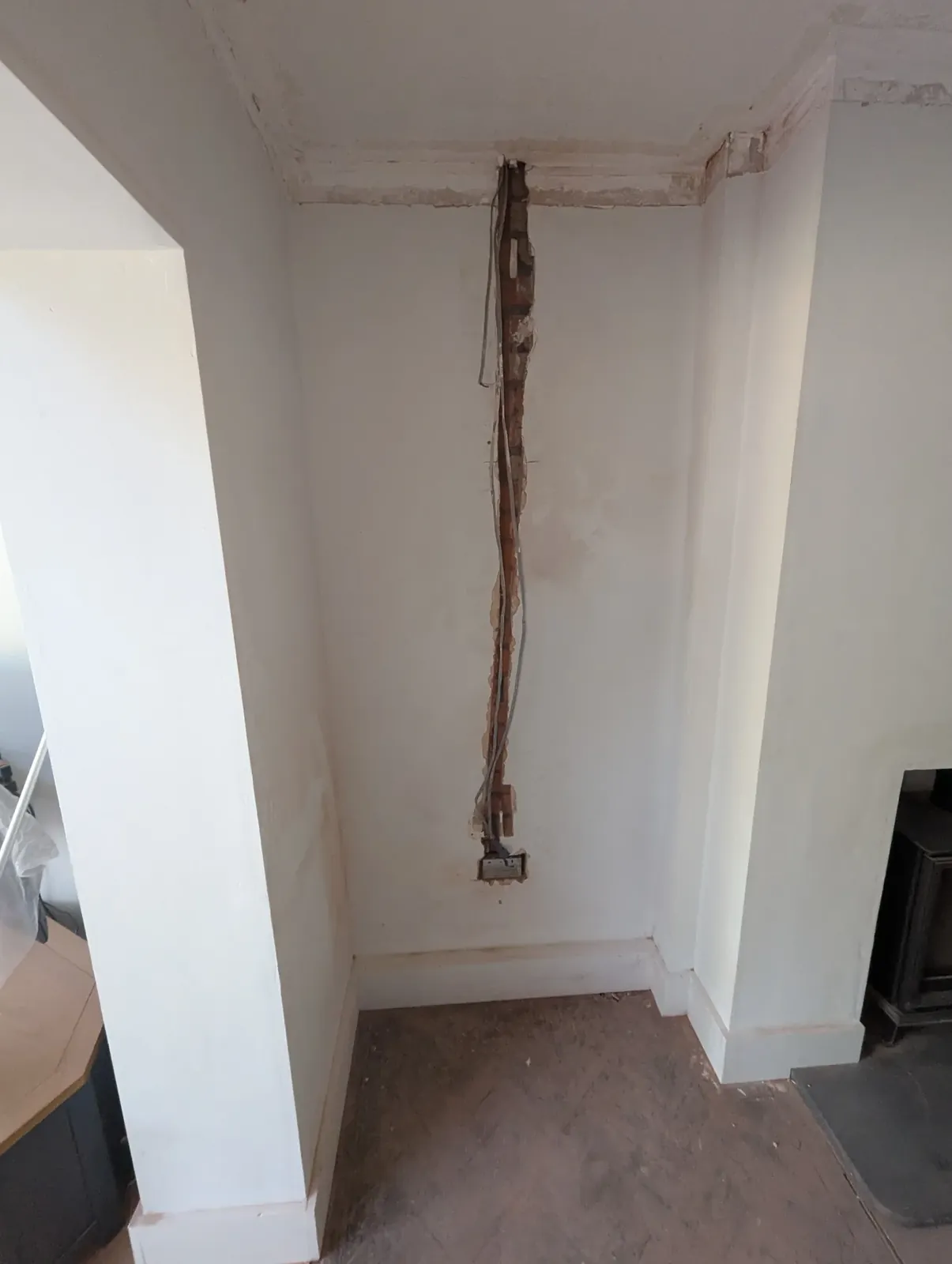
We won't pretend it's a quiet job. There is dust and noise, and the power has to be off for periods of the day. We work room by room and keep essential power on overnight wherever we can, but many people find it easier to stay with family for the heaviest few days. Filling the cable chases with a base filler (bonding coat) is available as an extra, and for full re-plastering we can put you in touch with plasterers we trust.
Cost Guide
Every house is different, which is why every rewire we do starts with a survey rather than a guess over the phone. As a guide for South Wales (all prices include VAT):
- 1 to 2 bed property: typically £4,000 to £5,500.
- 3 to 4 bed home: typically £5,500 to £9,000+.
- Timescale: most full rewires take 5 to 10 working days, depending on the size of the property.
A few things move the price. An empty property is quicker and cheaper to rewire than one you're living in. Extra sockets, USB points, outdoor lighting or smart controls all add to the job. And if the survey finds the earthing needs improving, we'll tell you upfront. What you won't get is a surprise bill at the end: the quote is a fixed price, and our workmanship is guaranteed for 12 months.
Not Sure? Start With an EICR
If you're reading this thinking 'some of that sounds like my house, but I'm not sure', the honest answer is to get it tested. An EICR (Electrical Installation Condition Report) is an in-depth check of your fixed wiring, consumer unit, sockets and light fittings. It usually takes 2 to 4 hours and costs from £150 inc. VAT for a 3-bed house, depending on how many circuits and consumer units there are.
The report rates the installation Satisfactory or Unsatisfactory and codes anything that needs attention, so you'll know whether you need a full rewire, a partial one, a consumer unit upgrade or just a few repairs. It takes the guesswork out of it, and it means any money you spend goes where it's actually needed.
We're NAPIT registered, and we'll always give you a straight answer. If your wiring is fine, we'll tell you. If it isn't, we'll explain why in plain English. Get in touch to book a survey or an EICR.
Frequently Asked Questions
Most full rewires take 5 to 10 working days, depending on the size of the property and whether you're living in it. The work is done in a first fix, where new cables are run, and a second fix, where sockets, switches and fittings go on and everything is tested and certified.
You don't have to. We work room by room and keep essential power on overnight wherever we can. There is noise, dust and time without power during the day, though, so many people choose to stay with family or friends during the heaviest part of the job.
Fine finishing, skimming and painting aren't part of standard electrical work. We can fill the cable chases with a base filler (bonding coat) for an extra cost, and for full re-plastering we work with trusted local plasterers we're happy to recommend.
Yes. As well as full rewires, we carry out partial ones, such as a kitchen or an extension. The survey or an EICR will show whether the rest of the installation is in good enough condition to leave as it is, and we'll be honest with you either way.